Showing posts with label Holiday. Show all posts

Tuesday, December 31, 2013

The Dinner

Just when you thought El Jefe had abandoned her post.  Take yourselves back in time, way back, to early December.  Fake snow on the front porch, the aroma of rich winter cooking in the air, Christmas trees alight, and avid readers drunk on champagne.  It could be none other than the twelfth annual holiday Book Club! Even better because Blondie was all up in the hizzy!  Once in BC, always… 

Thanks to The Highlander and Mr. Matty once again for hosting.  Seems like just yesterday there were a million calories worth of artichoke dip and cured meats set forth before us, to be followed by beef bourguignon (new recipe—a winner!) ladled over truffled mashed potatoes (it’s always early January before El Jefe recovers from potato mashing carpal tunnel syndrome), roasted brussel sprouts, non-under-saladed salad (a bounty in fact!), crusty baguettes and Heath Bar cookies galore.  Deee lishy! All El Jefe wants for Christmas is to never stray from that menu.  And the other thing El Jefe wants is for Carmen not to take ALL the leftovers home. Ever. Again.


Our December book, The Dinner, by Herman Koch, is an international best-seller but did not fly off the shelves among our group.  It came in at a lackluster 6.7. To refresh our collective memories, this was the story of two families living in Amsterdam:  Paul, an ex-schoolteacher (dishonorably discharged as we later discover), his wife Claire, and their son; and Paul’s brother Serge, Dutch presidential hopeful, his wife Babette, and their two sons, one adopted from Africa.  The children of these two families commit a heinous crime when they set a homeless person on fire inside an ATM booth, and the story deals with the parents’ discovery of this incident and the ensuing consequences—all recounted during the course of a dinner at one of Amsterdam’s hottest restaurants. Despite the violence and psychological twists in this book, several people commented that it was a slow read:  long stretches between inflection points, disjointed chapters flipping back and forth in time, and a pace that just generally dragged.  As a counterpoint, it was noted that the pace of the book was deliberately measured in order to match the theme and setting, that is, it took place over multiple courses of an elegant meal rather than being served up in one shot like fast food.  The Dinner also was criticized for not having a single likeable character and for the fact that Paul, the protagonist, did not wrestle with the moral issues in the story at all. On the other hand, the author clearly intended the readers to grapple with the significant moral questions presented, and we went around the room and talked about what we each would have done if our own child had committed the crime but had not been apprehended.  Would we keep silent and hope the authorities never figured it out?  Or would we turn our kids’ asses in? In addition, the book was highly successful in its stunning 180 degree flip of the reader’s expectations as to which family was “normal” and “happy.”  The book is narrated by Paul, and at the outset he depicts himself and Claire as the upstanding couple and casts doubt over Serge and Babette.  Most of us really enjoyed the way Paul’s utter depravity was developed little by little—his uncontrolled episodes of remorseless violence brought on by some unidentified (and, according to The Doctor, fictional) genetic flaw—and then of all things Claire turned out to be a total psychopath, instructing her own son to kill his cousin and slashing Serge’s face to pieces with the stem of a broken wine glass so the truth wouldn’t come out. Dang! Finally, because of the fact that Paul turns out to be so cray-cray, he is an unreliable narrator and the reader is left questioning whether there are parts of the story that never even happened at all.  In sum, better than last year’s book on magic tricks but a far cry from Zeitoun

Who needs dinner in Amsterdam?  Just snacks when you get the munchies.

 Deceptively peaceful.

Cate Blanchett will make her directorial debut adapting The Dinner-- easy, Claire.

The January recap is right on the heels, stay tuned. xoej

Sunday, January 6, 2013

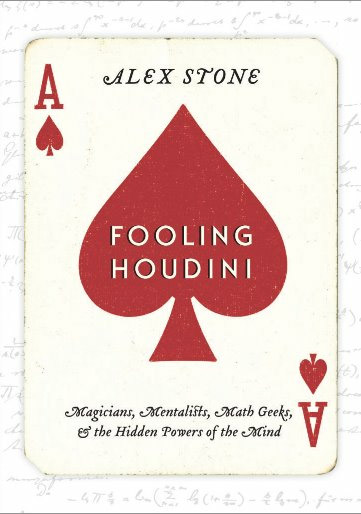
Fooling Houdini

Thanks to the Highlander for hosting the 10th annual Holiday BC!  Hard to believe, but true.  Love that it's become such a tradish, even down to the menu:  hot artichoke dip (the low calorie one), bruschetta, beef bourguignon over garlic mashed potatoes, LOTS of kale salad, haricots verts, brownies and blondies and those famous Heath Bar cookies from Logan's Run. Lots of champers. Lots.  Thank goodness we had enough food. 

Well, it looks like Alex Stone couldn't pull a high rating out of a hat for our December book, Fooling Houdini.


The book on average scored a 5.3.  From the critics, two main themes were repeated:  first, that the book was too "thin"--in other words, not enough tricks in the bag to fill 300+ pages (in fact, the 10th Member said the entire book should have been an 8-page article in Vanity Fair:  snap!)-- and second, the story didn't flow well, skipping around from physics to street hustlers to the author trying to pick up girls in bars using card tricks. While these readers found certain individual elements among this melange of topics to be intriguing (in particular, learning about New York's magic "underground" was a favorite), there wasn't enough overall continuity to keep the audience engaged. Others in our group (haters, all of them) said they just didn't care about the author and that the book got overly technical. This last point is ironic considering how much heat the author took for "revealing" magic tricks in his writing.  It would seem that your average reader doesn't really want that level of detail and certainly isn't going home and trying to replicate the Ambitious Card Routine. On the flip side, the non-haters appreciated the insights into the history of magic, the tie-ins to math and science, the play-by-play instructions on how to run The Monte, and the theory that Jesus Christ himself might have been a magician. Abracadabra, so much for miracles. One thing we all could agree on: the dork factor here was super high. Super. High. Magic Olympics, anyone?

Dai Vernon, a.k.a "the Professor"

Richard Turner, card manipulation expert (and blind!)

 Jim McBride.  Oh so Vegas

Not sexy, right?

Sexy

In related news, check out this blast from the past!  Our next meeting is at Chez Jefe on Tuesday.  We are reading Ms. Hempel Chronicles.  See you there and then.  xoej

Tuesday, December 11, 2012

Cloud Atlas

Thanks to the Maharani for jumping right in to host the November BC.  We caught up on the month's gossip over wine and a cheese platter, followed by the perfect fall meal:  Ina Garten's beef short ribs (falling off the bone!) with potatoes and, heavens, some delish dessert that is escaping poor El Jefe's overtaxed memory at the moment.  El Jefe does recall, however, the stunning arrangement of seasonal branches and leaves in the center of the Maharani's kitchen island!  Beautiful!  Maharani, you can host BC any time!


On to the book, as, given the late hour, El Jefe needs to keep this short (unlike Sloosha's Crossing, which was anything but...)


David Mitchell's tour de force Cloud Atlas scored a 7.3.  Let's break this down a bit further.  Now, this was an extremely difficult piece of literature to sink one's teeth into, and indeed there were two of our fearless band who did not make it to the main course and therefore abstained from rating.  A lowball 3 from the Maharani was paired with 8s and even a 9 from the rest of us.  An interesting dichotomy.  This book was comprised of six separate stories that shared certain thematic connections and were organized for the first half of the book in chronological order, and for the second half in reverse chronological order--with Sloosha's Crossing at the apex (or nadir).  The characters, plots and linguistic styles ranged from a Melvillian sailing expedition from the 1800s featuring questionable physicians and aboriginal stowaways, to the modern day rise and fall of a British book publisher cum old folks home prisoner, to a heart-wrenching tale of violence and survival set in post-Apocalyptic Hawaii and written entirely in a made-up pidgin dialect.  Phew!  So what did we make of all this?  Clearly Mitchell was not entirely successful in interweaving these tales.  The low rating was given on account of the stories failing to relate to each other in a coherent way and a lack of payoff (understandable that one would be looking for a payoff given how difficult it was to get through this book!).  On the other hand, high marks were given for the sheer literary achievement of Cloud Atlas and its many inventive features.  True, not everything was spelled out (in fact, most things weren't).  For example, what the heck was going on with those comet-shaped birthmarks sported by one character in each story?  To some, the birthmarks were an annoying and unsatisfactory gimmick.  However, as Ms. K. insightfully noted, even though they were not fully explained, the birthmarks might have symbolized death and reincarnation, a central theme of the book.  Overall, it seemed like the amount of enjoyment taken from this book was influenced by the reader's expectation, and perhaps the best way to read Cloud Atlas is with no expectation at all, just a willingness to go to whatever time and place the author takes you.

Interestingly, the motion picture feature was released the same week, to mixed reviews.  How about the casting?

Tom Hanks as a goatherd survivalist;  he also plays the nuclear physicist Isaac Sachs

 Halle Berry as Luisa Rey;  she also plays Meronym in the Sloosha chapter


Ben Whishaw as the composer Robert Frobisher;  also plays the record store clerk who helps Louisa Rey find a copy of the Cloud Atlas Sextet


 Jim Broadbent, playing Timothy Cavendish the book publisher;  also plays the composer who takes Robert Frobisher as his apprentice

Still confused?  Here's a guide to all the characters!

Our next meeting is, oops, today, that is, in 18 short hours.  It's the annual holiday BC at the Highlander's house.  Hopefully everyone knows their dinner assignments and has practiced their magic tricks (and, of course, read the book--we never said this wasn't a high maintenance book club!).  See you very, very soon.  xoej

Wednesday, December 21, 2011

The Sense of an Ending

Thanks to the Highlander for hosting our Ninth Annual Holiday BC!  The house looked beautiful, as always, the champagne was flowing, as always, and the level of book club controversy was right where it should be for the holidays.  We started off with hot artichoke dip and a cheese and charcuterie platter, followed by--what else!--beef bourguignon over creamy mashed potatoes, a festive kale salad with ricotta salata and pomegranate seeds, and roasted brussel sprouts.  Not enough calories for this crowd, so the pecan pie and Heath Bar cookies rounded out the evening and all of us.  December book club would not be the same without those Heath Bar cookies!


Julian Barnes' Sense of an Ending scored about a 6.5.  December book club would also not be the same without someone, of the male gender, who puts up a fuss about rating the book.  Come on people, it's just a book club rating, not an official pronouncement of literary criticism!  Unlike last year's uniformly high marks (including the historic "double 10" couples vote!), this novel was more inconsistently received.  There was a camp around the 7 to 8 zone, some haters around 4 and 5, and those who rated it a 6.  Oh, wait, that was Brother D rating Chris a 6.  Never mind... (Incidentally, El Jefe was extremely content to sit back, sip champagne, and let Brother D crack the whip.)  Although the book's rating was lackluster, the discussion was not.  The overarching theme of the novel was about growing old, and how, when we look back upon our lives, we inevitably view our own history through a lens that distorts the truth.  Do we perceive ourselves as better people than we really were?  More fair?  More honest?  More important?  Although somewhat heavy-handed, the author framed these questions in an eloquent and interesting way, first through the classroom discourse in a prep school history class, and then through the events that unfold in the life of everyman Tony Webster, the book's narrator.   Tony sets forth the story of his school years, his best friend, Adrian, his youthful romance with Vanessa, and his innocuous journey into middle age.  The first half of the book progresses slowly, with beautiful prose but not a lot going on.  Until we learn about the venomous letter Tony sent to Vanessa and Adrian, containing a curse that ultimately comes true.  Not only does the letter force Tony to re-evaluate his memories and, in fact, his entire character, but it forces us, as readers, to question everything we have been told.  (A heated debate, El Jefe recalls, ensued over whether Tony being an "unreliable narrator" was a noteworthy feature of the book, or whether all narrators are unreliable and therefore this was an obvious and uninteresting observation.  Ah, the holiday BC!)  We also hotly deliberated over the end of the book.  Why was Vanessa so angry with Tony when she should have been angry with Adrian?  Why did the mother leave Tony the diary?  Why was her bequest to Tony "blood money?"  Although this book was not for everyone, its poignant and ominous ending leaves each of us with much to reflect on, and the disturbing uncertainty of wondering what long-forgotten act may come back to haunt us, compelling the revision of our personal legacy as we believe it to be.


Blood money. noun. 1. a fee paid to a hired murderer. 2. compensation paid to the next of kin of a slain person. 3. money obtained ruthlessly and at a cost of suffering to others. 4. money paid to an informer in order to cause somebody to be arrested, convicted, or especially executed.


We are very excited to start 2012--our 10th year!--by welcoming T-- and R-- into The Club of Books.  Our January meeting will be either at Chez Jefe, or at the Winter Chateau, depending on our construction situation.  Date to be confirmed by separate e-mail.  Our next book is The Poisoner's Handbook:  Murder and the Birth of Forensic Medicine in Jazz Age New York, by Deborah Blum.

Merry Christmas to all, and to all, read early and often!  Until 2012...xoej 

Sunday, December 19, 2010

Zeitoun

Thank you, thank you, thank you to the Highlander for hosting our 8th annual Holiday BC!  What a gorgeous, elegant, and festive evening.  The house and the tables looked divine.  As someone remarked, "Wow, this is really a grown up's home!"  That's right:  who needs Mandy when we've got Moraga?  In El Jefe's humble opinion, it was our best holiday event yet.  Why not start every meeting sipping champagne, tucking into spinach artichoke dip (the low fat kind, right?), and munching on prosciutto-wrapped marinated artichoke hearts, all in--well, what could only be called a sitting room.  And sit we did, enjoying cocktails and company until the index cards got passed out.  Apparently, The 10th Member of TCOB decided it was high time to impose some rules and regulations aimed at ensuring a neutral and fair outcome on the vote.  Like a United Nations electoral observer, The 10th Member made sure that each person had a standard issue ballot, a private opportunity to mark their number, and that each ballot was deposited securely into... his hands.

   The presidential elections in Honduras were free and fair.  Just like TCOB.

The next step in the process was to have each vote announced, going around the room one and a half times to make sure that each person's vote was counted, either once or twice.  But El Jefe is confident of the results, which gave the book an average score of 8.5 and a 95% rate of completion (you know who you are!).  The secret ballot process caused the Doctor much consternation:  like a dangling chad, she typically likes to throw a little uncertainty into the mix by changing her vote depending on which way the wind is blowing.  Knowing that a last-minute switch-up would be impossible under the keen eye of The 10th Member, she and Diggity-D both went for broke with an unusual couples' vote of matching 10s.  There might have been some other 10s, but it was shortly after that point that El Jefe began to slide into a narcotics-induced fog, and the details get a bit hazy.


There is no question, however, that Dave Egger's Zeitoun garnered the most enthusiasm and genuine discussion of any holiday BC book to date.  El Jefe vaguely recalls more than one person saying that this book was life changing.  Like the Glass Castle, it was one of those stories that opens your eyes--and wide-- to the crazy shit that goes on right here at home, things you imagine happen only in third world countries.  There were so many sad and despicable scenes in this book:  elderly people trapped on rooftops, dogs shot to death on a highway overpass, a mentally retarded person hosed down with pepper spray in a makeshift jail, a FEMA trailer lying locked and useless in the yard for over a year.  The scenes from "Camp Greyhound" were some of the most painful to read, not to mention the utter trampling on the due process rights of American citizens.  It was terrifying and depressing to see how easily both legal and ethical standards went out the window, and with no apology or restitution.

"Prisoners" being led into Camp Greyhound.

Please help.

In the 9th Ward.

Not everyone in the group was entirely sympathetic to the main character, Abdulrahman Zeitoun.  Certainly there were some that partly blamed him for choosing to stay behind in the face of a mandatory evacuation (not to mention common sense), and having such an inflated opinion of himself as the saviour around his neighborhood.  Others remembered well the heightened sense of suspicion and paranoia that still lingered after 9/11, and almost took a "what do you expect?" attitude, given that FEMA had been placed under the umbrella of Homeland Security.  Still others critiqued either the author or Zeitoun himself for what seemed like obvious oversights:  for example, once Zeitoun got out of jail, how come he didn't help his friends?  What took Zeitoun's wife so long to call a lawyer?  But despite these differences of opinion, there is no doubt that this book was provocative and profound, and generated an empassioned discussion that followed us all the way to the dinner table.

It's always a relief to segue from dwelling over the misfortunes of others to a filet mignon roast with creamy gorgonzola sauce.  And rosemary-Parmesan mashed potatoes.  And a leafy green salad garnished with slivered red onion and mandarin oranges.  And cheesy garlic bread.  And paper party crowns.  Thank goodness for a delicious dinner and for our many blessings.  At this point, El Jefe did make her exit, longingly eyeing the annual bounty of Heath Bar cookies and the divine-smelling fruit cobbler.  Unfortunately, there were no leftovers the next day.

Please let this book be a reminder to all of us during the holidays how lucky we are to have friends, family, and a roof over our head, and to be generous to those in need.  Merry Christmas, and see you in the New Year!  xoEJ